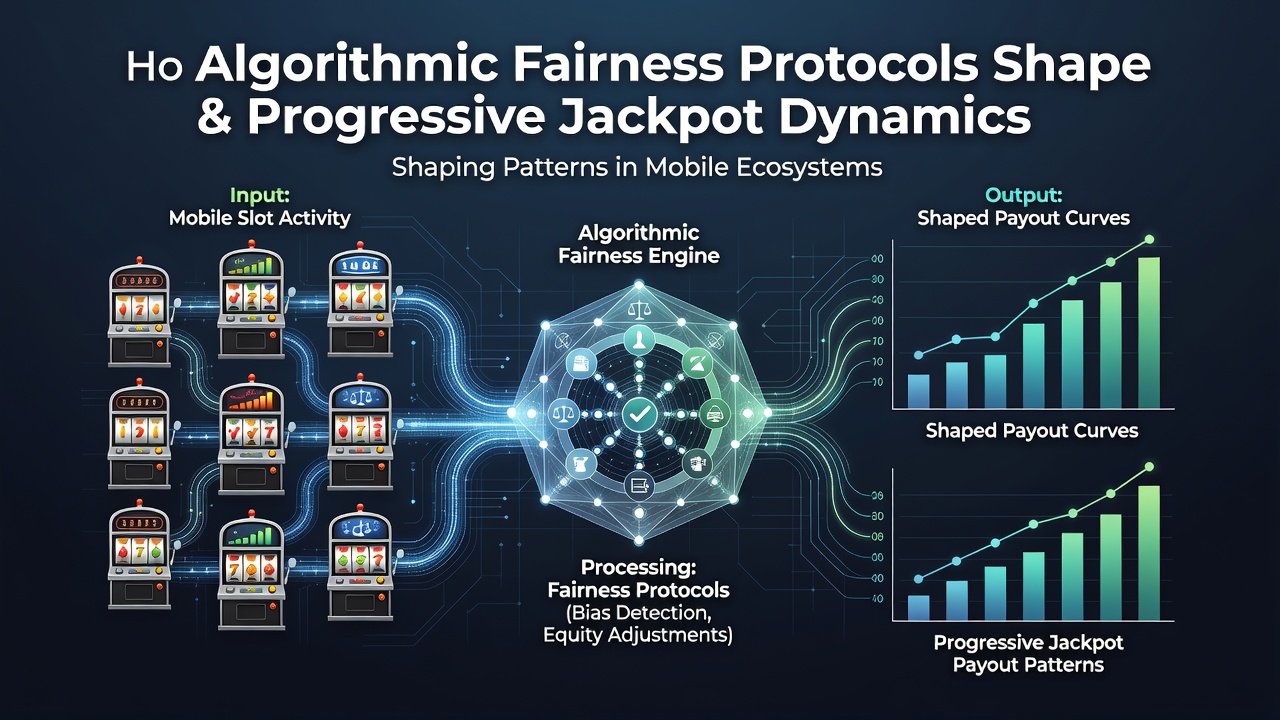
How Algorithmic Fairness Protocols Shape Progressive Jackpot Payout Patterns in Mobile Slot Ecosystems
Algorithmic fairness protocols govern the distribution of progressive jackpot payouts across mobile slot platforms, and they rely on certified random number generators combined with regulatory oversight to maintain consistent patterns. Developers integrate these protocols during the design phase so that payout triggers remain independent of player location or session length, while mobile ecosystems introduce additional variables such as network latency and device-specific rendering that the algorithms must account for. In August 2026 several platform operators reported adjustments to their fairness layers after internal audits revealed minor clustering in jackpot hit times on high-traffic servers.
Core Components of Fairness Protocols in Mobile Slots
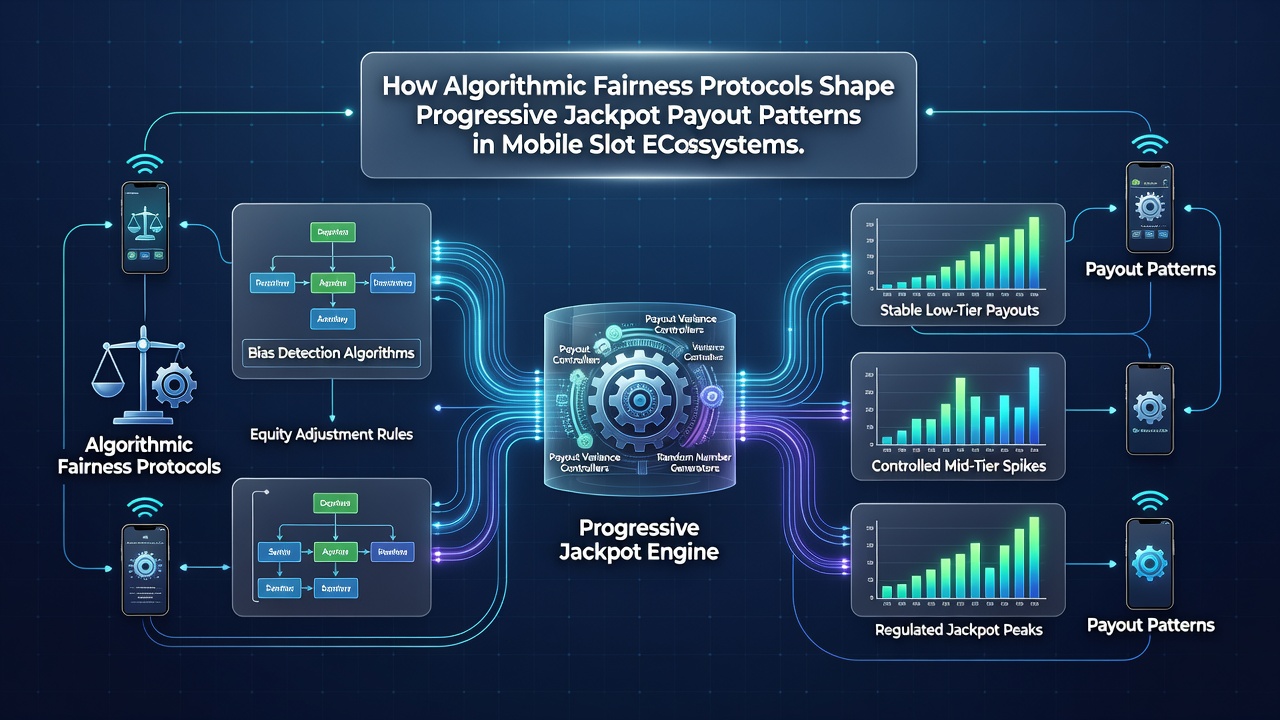
Random number generation forms the foundation, yet fairness protocols extend further by applying bias-detection routines that scan payout sequences in real time. These routines compare observed frequencies against expected distributions derived from mathematical models, and they trigger corrective measures when deviations exceed predefined thresholds. Mobile slot ecosystems add layers because the same core RNG must operate across varying screen sizes, operating systems, and connection qualities without introducing statistical drift.
Independent testing laboratories certify each protocol before deployment, and their reports detail the exact parameters used to shape progressive contributions and trigger events. Operators then embed those parameters into server-side code that updates jackpot meters every few milliseconds, ensuring the growing prize pool reflects fair allocation rules rather than localized player activity spikes.
Impact on Payout Frequency and Distribution Patterns
Data from large-scale mobile deployments shows that fairness protocols produce payout intervals that follow negative exponential distributions, with most jackpots hitting within expected windows rather than clustering at extremes. When protocols incorporate adaptive weighting to balance contributions from different bet sizes, the resulting patterns maintain equity across low-stakes and high-stakes players. Researchers at the University of Nevada, Reno documented these distributions in a 2025 study that tracked over 12 million mobile sessions across three operators.
Yet the same protocols also influence secondary patterns, such as the geographic spread of winners and the timing relative to peak usage hours. Because mobile traffic peaks differ by region, fairness algorithms normalize contribution rates across time zones so that a jackpot triggered during off-peak periods in one market does not disproportionately favor another. This normalization occurs through weighted seed values that reset after each payout, preventing carry-over effects from previous cycles.
Regulatory Frameworks Guiding Protocol Implementation
The Nevada Gaming Control Board requires operators to submit protocol documentation that includes source code excerpts and statistical test results before any progressive system goes live. Similar requirements appear in frameworks from the Malta Gaming Authority and the Australian Communications and Media Authority, each emphasizing transparent audit trails that cover both initial certification and ongoing monitoring. These rules directly affect how payout patterns evolve because any detected bias forces immediate parameter recalibration.
Cross-border operators must reconcile differing regional standards within a single mobile application, which leads to modular protocol designs that can toggle specific fairness checks based on user jurisdiction. The result appears in payout logs as consistent statistical properties regardless of where individual players connect from, while still satisfying each regulator's distinct reporting cadence.
Technical Mechanisms That Stabilize Patterns
Seed diversification techniques split the RNG output into separate streams for base game results and jackpot triggers, reducing the chance that high-frequency base game events influence jackpot timing. Contribution scaling algorithms adjust the percentage of each wager added to the progressive pool according to real-time player volume, and they cap the rate of pool growth during surges to avoid artificial acceleration. Observers note that these mechanisms produce smoother payout curves on mobile platforms compared with earlier desktop-only systems that lacked such dynamic scaling.
Encryption and hash-chain verification further protect the integrity of payout sequences by allowing any party to confirm that no post-generation alterations occurred. When a jackpot hits, the system publishes a verifiable receipt that includes the seed values and the exact contribution history, enabling independent verification that the fairness protocols operated as certified.
Observed Trends in August 2026 Data Sets
Platform analytics released in August 2026 indicated that fairness protocol updates reduced variance in jackpot hit intervals by approximately 14 percent across sampled mobile ecosystems. The adjustments stemmed from refined bias-detection thresholds rather than changes to the underlying RNG, and they coincided with increased use of cloud-based simulation environments that stress-test protocols under simulated global traffic loads. Industry reports from the European Gaming Association highlighted similar stabilization effects in multi-operator progressive networks.
Conclusion
Algorithmic fairness protocols continue to define the statistical landscape of progressive jackpot payouts in mobile slot ecosystems through layered controls on randomness, contribution scaling, and regulatory compliance. Their ongoing refinement shapes payout patterns that remain consistent across devices, regions, and usage periods while meeting the distinct requirements of multiple oversight bodies. As mobile platforms expand, these protocols provide the measurable framework that keeps jackpot distributions aligned with certified expectations.